This year has been a strange one for all of us. It started off without New Year’s Eve celebrations. International travel has been decimated for the most part. Social distancing became the new normal. Then masks became mandatory and a statewide lockdown ensued. Cases soared to the thousands and there was a push to be vaccinated. I’ve written at least four articles centred on COVID, including a lengthy poem back in July. I wrote a post for every week this year, fifty-two uploads in total. There were times where I struggled with ideas and others where I thrived.
Travels, highs, and videotape
Among them were ten reading lists, almost one for each month. Sooley by John Grisham was the finest fiction read while Eddie Jake’s The Happiest Man on Earth was the breeziest nonfiction text. The latter recently passed away at the age of 101. Furthermore, I had my first perusal of hallowed authors like Vonnegut, Murakami, and Chatwin. I had posts for Father’s Day and documented our jaunts from Bondi to Rouse Hill, Broadway to Top Ryde. More than chronicling my jaunts, I imparted my new threads and the new menus I tried. I shared photos of cuddly canines and offered suggestions for Long Weekend activities. I scrutinised green spaces like Hyde Park and the Botanic Gardens. I even examined the Hemingway doco. There were also the usual TV series and film reviews. Nomadland (2020) was probably the most lauded of them. I dedicated an In Memoriam post to PNoy. I made it a point to dissect a wide variety of topics and issues. I gave a clear portrait of our city pre- and post-lockdown.
Hyde Park
Giant chess set (Hyde Park)
Director Chloe Zhao
Hunter Connection
Darling Harbour
Eastgate Bondi
2021: By the numbers
A review of Hunter Connection was the year’s most popular post, with thirteen likes. In total, there were 160 likes on WordPress this year, up from 139 last year. The per-post average has increased from 2.7 to 3.1. This represented the highest yearly figure on Mot Juste. Sharing stories remain an integral part of my blogging. Recently, I posted about ‘Banyo Tales.’ There were many others where I started off with a pertinent account before branching out from there. See also: ‘Mac OS Big Sur reviewed’. While the COVID reality inhibits our travel movement, we should adapt to the landscape. People have been beached and uprooted since the dawn of time. Humankind has always been on the move, in search of better conditions. Change will not end with COVID, so we must remain proactive.
Support across timezones
The support for my site has been kind of consistent. There were a pair of posts that hit double-digit likes while many got at least three. I must add though that the comments were down. I’m happy to share that I got support from different corners. These include the UK, Romania, UAE, Australia, South Africa, the US, Ecuador, Portugal. That these bloggers could take time off their day to show their appreciation, is galleons. That they could spare a few minutes of their time to peruse your work is comforting. Aside from the likes, I’ve received a fair amount of followers this year. Though I may not have a horde of followers, I feel reinforced.
Sustaining the momentum
The next step is clearly to maintain the momentum. I need to keep writing and to share my stories. There will be tough weeks when the ideas don’t present themselves so quickly. Like professional athletes, I must play through it and continue to deliver. In the last few years, I have continued to read books. The total this year is down to about thirty-two. Indeed, unlike in 2020, I have been unable to proffer a list every month. All six of my last books were lent from the library and all were new releases. This coincided with the end of lockdown. With the reads, Netflix and DVDs, ‘the show must go on.’ We must continue to create in these uncertain COVID times. I look forward to another year of blogging, reading, manufacturing short stories, streaming, trying new experiences, and reviewing.
The Christmas long weekend is upon us. Beginning today, the 25th, Australians will observe a four-day break. Practically all stores and services are closed during Christmas Day. This includes the leading supermarkets such as Coles, Woolies, and ALDI. By law, smaller groceries and retail shops are likewise prohibited from trading. Hairdressers, optometrists, physiotherapists, banks, and takeaway shops…they’re all closed. We can use the time to connect with loved ones, rest, stream, read a book, and pig out on pork crackling, seafood, and roast dinners. Don’t forget the dessert. Tomorrow – more commonly known here as Boxing Day – is a different story. The malls open early, with Myer and David Jones (DJ) welcoming patrons at 5am. The annual Boxing Day report shows a throng of critters bursting onto DJ as the countdown ends. Some Westfields open shop at 7am. Put simply, it’s the storm after the Yuletide.
Christmas tree at QVBBoxing Day crowds
Twenty-oh-nine
My first taste of the sale frenzy was in 2009. We went out later in the afternoon and by then, all the best bits had been snapped up. The jackets there were all XL and above. While considering some denim, we talked in our language. There was a Pinoy guy hanging near us. Upon hearing us, he immediately reverted to English. My sister made light of the abrupt change. I guess he thought that we couldn’t speak in English and that, by conversing in the King’s speech, we would not comprehend them. What isn’t advertised on my gulliver is that I was born in Sydney. Counting my childhood, I’ve lived here longer than he had.
A similar thing happened at JB-hifi. I spoke with my mum in our dialect and a couple of oldies were amused. They said that they were from the same state. They appeared to be underweight – or possibly overworked. Next thing you knew, they exited the shop. ‘They’re sisters,’ mum said. ‘Probably thought we would interrogate them.’ While the first example was disconcerting, the second was an exercise in evasion and being anti-social.
Twenty-thirteen
On Boxing Day of 2013, I made my second incursion into the shopping frenzy. I would go on another year, but this is so far the only time I rushed out while it was still dark. I woke up before four am, took a quick shower, before ordering something online. Then it was on to Myer. I recall getting 2 $10 vouchers courtesy of Scoopon. Since a family member didn’t want them, I used both to purchase a grey plain polo from the Country Road concession. We had $80 in accumulated gift cards. This covered the cost of three Australian-made bath towels.
They advertise that this was the biggest day of deals on their calendar. With bargains of fifty percent off, they didn’t disappoint. There were a fair number of people when we entered. By 7am, it had become a horde of shoppers. One must note that, at the time, only stores in the Sydney CBD were allowed to operate during that day. The ban on trading in suburban Sydney has since been lifted.
Oporto
George St, Sydney
Brekkie, DJ, lunch
We had brekkie at the food court, probably something from Oporto. Heading out this soon was against our routine. We ducked into DJ where the secret was already out. It seemed to attract all sorts of people, many of whom seemed more like lookers than actual buyers. We didn’t stay long there. By lunchtime, Pitt St Mall had turned bumper-to-bumper. It was worse than the morning peak hour. It seemed like the entire city had converged into the pedestrian mall. We also browsed at Cotton On. It was packed to the rafters and we could barely move. We had our lunch at a Japanese place. There were a lot of diners ordering.
From Broadway to North Ryde
We headed to Broadway Shopping Centre. At Target, we managed to nab some Tefal cooking pans which were Made in France. I believe they were also half-price. This kind of day was one and done for me. It was nice to grab bargains, to go outside my comfort zone, and fight the crowds. However, it’s not something I would do every year – especially since we’ve bought all sorts of things over the years. In 2017, I caught a movie at North Ryde with my friend. The movie house was packed as the air-con was turned on. I’ve never seen the theatre as packed – with the exception of the last Avengers in April 2019. When we had a look at Myer after the film, all the good ones had been plundered.
‘It’s all XXL,’ this Desi guy told me. I felt like a tornado had just passed through the local Myer. We were late on the action. GAP was closing down. After I queued, I was told inside that the menswear had sold out.
Steeped in history
Boxing Day is named after the tradition of handing tradespeople Christmas boxes. It has British origins and has been adopted in other Commonwealth countries. Each year, Aussies are expected to spend billions during the shopping bonanza. However, other shopping events have appeared to coax people on other days of the year. Click Frenzy, the online shopping event, has allotted several days throughout the year to get our $$$. Black Friday has become bigger, with bargains a month before the holidays. This is not to mention the midyear and midseason sales, which hawk significant reductions as well. Boxing Day is more than just for purchases. There is an annual Cricket Test Match being played in Melbourne. Furthermore, the yearly Sydney to Hobart race commences on the 26th.
This year will surely be different, as the shadow of COVID looms. The ubiquity of COVID check-ins will change the face of traditional shopping. Social distancing means that stores could only take in a limited number of people. Dining, whether in the food court or other areas, will not be the same. In some cases such as on public transport, masks are still mandatory. Regardless, what makes Boxing Day special – as I’ve proven – is the chance of shopping together with your loved ones during a most important time of year. Yes, there are other opportunities – but they do not coincide with the merriest of seasons. It’s time to play those Christmas CDs.
Following my last list, I begin with Grisham’s latest. The sequel to The Whistler (2016), The Judge’s List puts a new spin on the serial killer. The book once again debuted as a number one bestseller, which has been the norm for Grisham releases. Stephen King’s Billy Summers is another popular pick. A for-hire sniper out on his last job scrambles to contain the fallout from his hit. The master storyteller allows us an ear into small-town America while foregrounding one of his most memorable duos. Finally, Indra Nooyi’s memoir is the third leg of the tripod. This offering from PepsiCo’s former CEO is a highly rated bestseller that would cater to the business-minded. With New Year being two weekends away, this is probably the year’s last catalogue.
1. The Judge’s List (Grisham). Lacy Stoltz, the heroine of Whistler, returns as a bureaucrat in this one. Like her colleagues, she sees her role as a dead-end job and wishes to work somewhere more exciting. The Florida Board of Judicial Conduct (BJC) employs Stoltz, who is also at a crossroads in her personal life. The book opens with a rendezvouz between Lacy and Jeri. The latter opens up about her father’s murder. She believes that a sitting US judge slayed her dad. He uses the same method with every kill. Jeri believes that he keeps a list of people who have wronged him and waits patiently before committing the perfect crime. However, while she could provide motive and method, she admits to lacking the cold-hard evidence that could tie Judge Bannick to the killings. Being well-versed in forensics and the law, Bannick has stayed one step ahead of the authorities.
Jeri wishes not to go to law enforcement, instead trusting Lacy and the BJC with her information. She must be very careful as this knowledge could well jeopardise her life. Through her resourcefulness, she has carried this burden alone for twenty years. The novel is a cat and mouse game where each party tries to outwit and out the other. Judge Bannick is a techie and soon learns of the BJC investigation. To make matters worse, he receives knowing poems anonymously. While the BJC looks into the matter, the slayings continue. At last count, Jeri believes there has been at least ten dead bodies across six states. She hopes that she wouldn’t be next on the naughty list.
The book reminded me a bit of Dexter Morgan. Both the latter and Judge Bannick worked in law enforcement. While Morgan was a blood spatter analyst, Bannick also lived a double life. Both sadists have Florida connections: Morgan with Miami Police District; Bannick as a Pensacola judge. Both of them lived for the kill; Dexter had a so-called ‘dark passenger.’ The main difference is that the latter is a vigilante who ‘takes out the trash.’ At least in the onset, he is guided by a code. Meanwhile, Bannick kill-bills those who oppressed him. In general, the writing was typical Grisham: light, endearing, and fast-paced. The short chapters will keep you reading with rapt attention. However, the ending was a little weak and disappointing, maybe even a letdown. It reminded me of his 2008 work, The Associate. Moreover, just like his recent releases, he ran out of gas near the end and was in a hurry to conclude.
Rating: 4.65/5
‘You forgot the flamingo….’
milk moustache
Paul Bearer
WWE
2. Billy Summers (King). I haven’t powered through a lot of King’s work, certainly not like Grisham’s. Though his work is breezy, it’s still not as cruisy as Grisham’s, and is almost always longer. When I did find the time to peruse King, I admired his witty turns of phrases. ‘The land of the living’; ‘milk moustache’; ‘binocs’ are just a few of these idiosyncrasies. We shouldn’t be surprised as he’s been telling tales since the seventies. The protagonist, Billy, has provided his services to silence bad men. His last outing involves a novelist cover, and he works on the fifth floor of an office building. He is provided with a MacBook Pro and told to bide his time. I wish I had that corner office. Regardless, he doesn’t trust his handlers and dumbs down his writing on the Mac.
From the start, he senses that something is wrong. Bringing down the baddies is his motivation but likewise are the shekels. Two million dollars does not grow on trees. For six months, he presents as David Lockridge, the goody two shoes next door neighbour. He plays Monopoly with the kids and hangs out with the adults. He even puts his sniping skills to good use and wins Shanice a flamingo. The kid then draws him a flamingo picture, which he keeps as his lucky charm. He even crafts a third persona: Dalton Smith. The latter is an overweight techie who spends long days away from his abode. As he passes time writing in the building, he grows to love the craft.
the Rockies
The day of the job comes and everything turns ugly. He barely manages to slip out amid the commotion. The media does not take long to realise that he was the gunman. He lays low in Dalton’s apartment, writing when he can, until he rescues a damsel in distress. For the next two hundred pages, they become like Bonnie and Clyde. They terrorise the abusers and shack in no-name motels. They want to get to the bottom of this and encounter thugs, a pedophile, and a mother out for blood. They find safe haven in the Rockies with Bucky, Billy’s long-time friend. Here, he churns out pages in a hut with an unnerving picture. King even has time to mobilise a wrestling angle that proves crucial to the conclusion.
Since Billy is an Iraq War vet, the novel incorporates flashbacks to this time. Personally, I did not enjoy the war bits but Billy’s book-writing makes up for it. We are treated to a book within a book. As the plot thickens, Billy’s writing improves. It’s also ironic that he is basically writing for himself but millions of King enthusiasts will read his handiwork. Sometimes, you can encapsulate a novel in one line. For Billy Summers: ‘You forgot the flamingo, you f…king fuck.’ Similar to Blood Work (Connelly): ‘Don’t forget the cannoli.’ Yet it’s all-around better.
Rating: 4.4/5
Temple in Madras, India
With Hillary Clinton
Indra Nooyi
3. My Life in Full (Indra Nooyi). I found out about this one a few months ago. I looked forward to reading the piece, but found it overrated. I believe I was not the target audience. Full is divided into four parts. The first salvo is the most accessible as the author recounts her years growing up in a middle-class household in Madras, India. The city is now known as Chennai. She lived in a three-generation home and her elders valued education. She left the house after college when she pursued an MBA in Mumbai. She then accepted an offer to study for another MBA in Yale (Connecticut). She didn’t have a lot when she crossed over and the American’s freewheeling culture shocked her.
She needed a wardrobe makeover. When she attended an interview, she picked a blazer two sizes too large and trousers that didn’t fit. Despite her look, she did not feel inferior to the crowd and powered on. She met her husband in the US; it wasn’t an arranged marriage. She has two siblings: an older sister and a younger brother. Both have been living in the US. Through most of the book’s latter half, she chronicles the struggles of being a working mom. She often had to make sacrifices for the greater good. She was fortunate to have the support of family members, who would care for her two daughters.
Don’t be mistaken: this is more a business book than memoir. Having been in the corporate world for so long, she foregrounds terms like research and development, marketability, branding, design, and revenue. Another thing I disliked was the constant use of lists. There seemed to be at least three of them in every page. Most seemed about five thoughts deep. In addition, she goes overboard with motherhood, empowerment, and childcare. Lastly, she unloads an extended rant at book’s end. This makes the memoir easily the most challenging finish this year. Hence, my contention of being the wrong reader.
However, I enjoyed bits of ‘The PepsiCo years.’ Nooyi was CEO and Chairman from 2006 to 2019. She provides insight on how she transformed the company into being more conscientious, sustainable, and healthier. She was likewise at the forefront as the conglomerate bought more brands: from gatorade to Tropicana, Sabra to Quaker Oats. Her pet phrase as CEO was ‘Performance with purpose (PwP).’ She asserts that her being CEO was only possible in America. This is not a light read, but you’ll learn a thing or two.
The aftermath of COVID has seen the closure of many stores. The months-long lockdown and lack of clients precipitated their downfalls. Some are lucky enough to still be standing. These are usually mid-level and high-volume franchises. They can afford to trade while closing some branches or brands. However, others are not so lucky. Small businesses are especially vulnerable, even with a helping hand. We must note though that some retailers have closed down for good even before the pandemic. Chalk it up to bad luck or poor management; these stores died soon, leaving us only with scattered memories. Kindly note that these are all stores who no longer have an Aussie presence. They might still trade overseas or indeed as a new entity, but not as their former brand name. Allow me to feature a number of them who were gone too soon. There may be others, but these are the names that matter to me.
1. Borders. The bookstore chain was once the face of the bookshop industry. Their hold reached Sydney and they were once ubiquitous in malls around the city. When new released were launched, they were the go-to place. Latest Harry Potter? Borders. Dan Brown? Borders. Jack West Jr.? You get the drill. Their strength was also a double-edged sword. All their branches were big concept iterations, sometimes even spread out over two levels. The extent of other bookstores such as Angus and Robertson and Dymocks, paled in comparison to them. With their surfeit of material, it really looked like a booklover’s Elysium.
However, big spaces also meant considerable rent. Thus, the venture was unsustainable. It reminded me of the 2008 Global Financial Crisis. The banks kept lending equity to homebuyers and when the bubble burst…whack! You’re out. I bought a few items from them in time. Magazines, a DVD, and others. I even signed up for their newsletter. I noted that, sometimes, their stores were bigger than some libraries. They picked the perfect time: before the advent of online shopping. They had been around much longer than iPhones and tablets. They shut all their stores about a decade ago. Note that the Borders chains in Singapore, Australia, and New Zealand operated independently of their US and UK counterparts. Regardless, I wonder: were they able to get rid of all their stock?
2. Esprit. This company was founded sixty years ago in San Fran. In the prior decades, it had expanded its footprint across Asia and the Pacific. I remember buying a nice check shirt back when they had a Myer concession. Often, we would shop at their factory outlet in Market City. I noticed that they had a lot of stock, sometimes in different colours. Sizing was not a problem as they had heaps. This was probably a red flag that people weren’t buying, despite their reasonable pricing. On Boxing Day 2011, we managed to score a few bargains including some pants and a thin cotton tee.
Have I mentioned their rewards program? It stacked up well compared to other stores. Aside from Boxing Day, we got a bag for my dad. On Good Friday, 2017, I nabbed a reversible pair of shorts down to 25 from 90 bucks. In their Birkenhead Point outlet, I grabbed a purplish polo with prints. Given the examples, it’s clear that they did many things right, but in their cut-throat industry, it may not be enough. The last purchase we made was a handbag for my sister. Not long after that, we saw on the news that they were closing all 67 stores in Oz and New Zealand. By 2020, they had retreated from the Asia as well. I still have most of the purchases; only the pants are gone. As they say, ‘It was good while it lasted.’
Market City (Sydney)
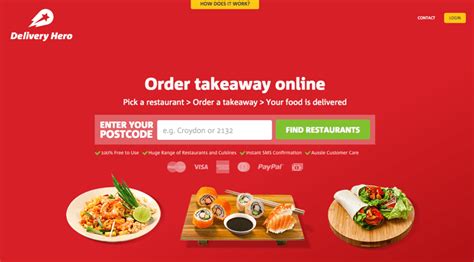
3. Delivery Hero. Some of you might not be as familiar with this one, but they were a leading food delivery service here in 2016. They are originally from Germany. I remember seeing their $14 off 20 promos, which happened almost every weekday. In terms of value, it couldn’t get any better. Nowadays, you could get $6 off but not $14. We took full advantage of these offers; I even had their app for easy ordering. Not everyday, mind you, but certainly whenever we needed a break from the tried and tested cooking. While the deal was very welcome, the service was no pushover either. It arrived prompt, accurate, and on time. We never had to complain about their service. Just as suddenly as it appeared, the company is now under the Foodora brand. It hasn’t been the same.
Foodora
4. EasyWay. This Taiwanese beverage company once operated 74 stores in the country. They were the original milk tea vendor before others followed suit. I remember buying from them a few times, earning points for my visit. I believe I even claimed a reward one time. Their drinks had a light taste and came in many delicious flavours. I tried more of them over time. I became aware of the best flavours. It wasn’t just milk tea; they also served fruit juices and others. Apart from having many tangs, they also came reasonably priced. My mum was an avid fan of their products and the redemptions came easily for her. Sadly, their brand disappeared quickly and by now, there are no more EasyWay stores in Oz. They have since rebranded as EpicTea, with others like Chatime carrying the torch.
Shifen waterfall
Taipei
Taipei
Taiwan DMC
5. Three. While I was still studying, this was a well-known telco, with a presence in both mobile plans and mobile broadband. The brand has a Hong Kong background. I signed my first mobile phone contract with them, which was for a year. This was before the age of unlimited calls and texts. At the time, you had like $300 worth of calls. A few of my peers were also with them. I remember the time when I wanted to switch providers. Perhaps due to their declining client list, they really wanted me to stay. They dangled all sorts of deals with me, but I said no. The final wangler was the latest iPhone. I thought about it for ten seconds before disagreeing. They let me go.
Not long after that, Vodafone phased out the company, which continues as 3 in the UK. The two Aussie telcos merged in 2009. By August 2013, Three was relegated to the land of the sleeping. To be honest, I wouldn’t call them an astounding company; hence my insistence on another telco. Their story goes on, with about 130 million users worldwide in 2018…but just not in Oz. Anyhow, they’ll always be my first mobile provider. For that, they deserve a bow.
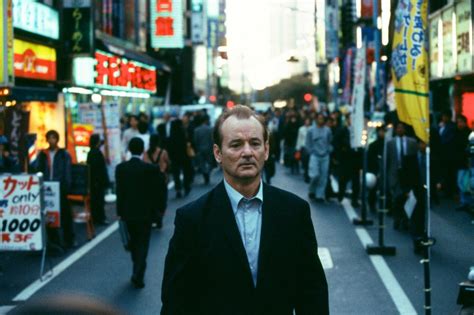
We live in a multicultural society. We speak different languages at home. Though we live in the same setting, we come from different backgrounds. We have dissimilar interests. English is deemed the national language but we all have varying levels of fluency. This could make for some awkward scenarios, where the message is lost in the process. The whole shebang is an extrapolation of one movie: Lost in Translation. The Oscar-winning flick follows one woman (Scarlett Johansson) as she navigates Tokyo with her new BFF, played by Bill Murray. The picture sees director Sofia Coppola at the height of her powers.
Once, I watched The Virgin Suicides on pay TV. I mentioned this to my ex-neighbour: my first look on Sofia’s debut effort. He then mentioned Lost, which I had already seen in bits.
Stills from Virgin Suicides (1999)
‘It’s a gem,’ he reasoned.
‘What’s so great about it?’
‘Everything’, he admitted. ‘The Tokyo scenery, the humour, the fully realised characters, the unconventional plot.’
When I elbowed him about Bill Murray, he was effusive with praise. He’s done commendable work in the past but Coppola got the most out of him in this outing. He told me that this was probably a career effort coming from Bill.
‘Do you remember the stockings scene?’
‘How could I forget? That was very memorable.’
We agreed that the scene was hilarious. ‘Rip my stockings.’
However, he told me that ‘it seemed like the woman was role-playing sexual assault.’
In the scene, a woman was telling Murray to rip her stockings, but she loses it when Murray does as commanded. Even though her instructions were obvious, something was obviously erroneous in the encounter.
——
I’ve had a few of these mixups myself. Allow me to share a number of them.
Once, I went to the Asian area in uni to get some lunch. I pointed at the Hainan chicken and told them ‘two choices.’ One of the assistants (there were two) thought I had ordered chow mein and gave me a number. I proceeded with my rice and viands order and did not put much thought into it. After about fifteen minutes, the assistant called out the number. I did not collect it since I did not order said item. Until I finished my meal, she kept at it.
I realised that the rice was not enough. I went to the counter to get more rice. When I was about to pay, the Asian lady spoke no English. She did not understand that I only wanted rice and that the two choices had already been paid for. I tried to tell her that I can’t just leave my meal because it will get disposed. I was glad to get out of that situation.
Hainan chicken
Murray towers over the creatures
‘Be careful of thy neighbour’s wife’
Speaking of meals, there have been other similar instances. I sometimes order Bahn mi from the Viet stores. I often get frustrated when I order it with chilli. Quite a few times, I would say ‘just a little chilli’ and they would then fill the bun with the stuff. They cannot distinguish between a little and a lot. Once, the same thing happened when my dad came around.
Upon seeing the rolls filled chilli, he told me not to buy from them any more since they don’t understand. Mind you, it’s not just Vietnamese. There was also this other race who did the same thing. My eyes would water every time I ordered Bahn mi from them.
It’s not just chilli either. When you tell them, ‘no sauce’, they think you mean NO SALT. Once, I pointed out to the owner that we just don’t want the sauce. She didn’t get it and instead pointed at the three containers.
‘One, two, three.’
There is no point in being sarcastic if you’re the one who can’t comprehend. Let’s not be confused: we are not the issue; their lack of language skills is the problem.
—-
In other examples, I was clocking this bakery once when an onlooker asked for gingerbread.
‘Jingle bells?’
‘No, gingerbread.’
The lady regarded him as if he’d requested caviar.
Another time, my mum was asking for jelly.
‘Cherry? Cherry?’
‘Jelly.’
‘No, we no have jelly.’
Going back to order mix-ups, allow me to share a few other instances.
I’ve twice been given the wrong order at this fast food place. Once in Sydney’s southwest years ago and also in the inner west last month. You have to wonder how attentive they are, or maybe they’re playing dumb on purpose. Or perhaps they are following someone else’s orders. Considering you’re paying shekels for an inaccurate order and overrated meal, it’s a disappointment.
Also in the southwest, I ordered from a world famous fast food chain. I clearly said ‘two cheeseburger meals’. They ended up giving me two DOUBLE cheeseburger meals, I only realised their mistake when they served me the wrong order. I mean it’s pretty obvious: two cheeseburger meals is NOT two double cheese. This time I’m sure I was clear. There was no one waiting behind me.
In all of these instances, the issues were external. No salt, little chilli, JUST rice, two cheeseburgers…I couldn’t have been more specific. It’s either they don’t understand, they’re lousy workers, or they’re doing it on purpose. I’ll leave my readers to make sense of their mess.
I’d like to share a few stories which I’ve accumulated through the years. There is a common theme among these tales.
I start with an account a while ago in Sydney’s north. I was passing through and was on my way home. I heeded the call of nature but made the mistake of leaving my backpack outside the station’s restroom. I was kinda in a rush.
Upon finishing my duties, I noted a guy who was on a walkie-talkie. He indicated my bag, ‘Is this yours, mate?’
He sounded worried.
‘Yup.’
‘Be careful. Your bag could be mistaken for explosives. It could also get nicked.’
I made sure to keep that in mind. Looking back, I didn’t think the red colour helped matters. A wine-hued backpack is a red flag.
toilet in Cairns, Queensland
Victorian-era water closet in London
—
A few months ago, I used the restroom in Revesby station. While I was doing my business, I heard this kid telling her mum about the comfort room. Not long after, the latter smacked her real hard. She started bawling. I would later deduce that they were with a stroller; she has a baby sibling. The stress probably got to her mother.
Despite the strain, I find the spanking very irrational. Getting pummelled after pointing out the toilet seems like overkill. No doubt such actions will not bode well for any kid’s development. Since kids are curious, it’s best to be patient and explain things. Different cultures have varying views on discipline. In Australia, the scenario is prohibited. The nation’s children are well-protected against these outbursts. Regardless, I’ve witnessed a few of these flare-ups.
The author
Revesby, NSW
Cast of The Slap (Au)
I discussed the use of the rod with an ex-neighbour many years back. He told me that he had some friends who were not spared as kids. He admitted that his parents never struck him, although he couldn’t just say whatever he wanted. His pops made sure of that. There was a long gap in the conversation; I believe he was prompting me to open up. Though we were close, sharing is not caring.
I grew up in another country and discipline was viewed differently there. The instructors could be harsher than their Aussie counterparts. This meant that the students were less wantonly. Moreover, if you want to learn more about discipline, the Bible has a lot to say. Skimming won’t hurt. I’ve heard of some parents who wouldn’t lay a hand on their kids. This leaves a lot of scenes of entitled kids who’d go bananas just for a toy.
‘What ADHD?’
A wise parent once told me that there’s nothing good ol’ disciplining can’t cure. If you allow your kids to misbehave, then they’ll always get their way. You might think it’s just a toy. Yet if you cave in one time, expect more to come. Indeed, a world where kids can have license against their elders is not fair.
If I may, ‘You have to nip it in the bud.’ Before the vine grows, before the tree sprouts, you need to make sure that our future is on solid ground.
I once read this Christos Tsiolkas novel, The Slap. This was made into a TV series. As you can deduce, the eponymous slap was the plot’s centrepiece. The child in question was a spoiled brat who got slapped because he wouldn’t play ball. Though he was cute, he had a bad temper when he couldn’t get what he wanted. Apparently, the kid had family issues, including an alcoholic father. The book problematises our perspectives. Who must we empathise with? The kid is clearly burdened with the wrong circumstances. Meanwhile, the system obviously favours the doer. Despite their flaws, they make a better impression. Yet we couldn’t help but agree that Hugo (the brat) would continue to wreak havoc unless someone deals him tough love.
Ultimately, being well-disciplined, kind, and emotionally-mature would open doors for our adult selves. These qualities would endear us to others and would create an appealing personality.
—
Once, I went in to use the station toilet. I thought it was vacant but was mistaken. Upon opening the door, there was a tall Asian dude inside.
‘Oooh.’
He sounded exactly like Juan Gilberto, my former classmate. Whenever something went wrong, the latter would go, ‘Oooh.’
Speaking of kids, I once stood beside this chap. This was during the flag retreat in grade school. I was playing with my rubber band when he exclaimed the same cry: ‘Oooh.’
Juanito, my classmate at the time, found this funny. I repeated the drill a few times for more laughs.
Another time, the same thing happened in the CBD. The lock was half-closed. When I unlocked the portal, an older lady – who was on the throne – said ‘Ops!’ She even rolled her eyes for good measure. Upon seeing her, I immediately closed the door and apologised. These examples reveal some refined denizens. Their reactions were much less confrontational and more prudent than the norm. On both instances, I had wrongly assumed that the cubicles were free.
This month, I’ve once again gone through the requisite trio of reads. As with the last catalogue, there are two nonfiction titles and one novel. Jay Williams’s moving autobiography was first. I read this ebook as his story intrigued me. We follow him through his early days, his triumphs at Duke University, and as a member of the Chicago Bulls. We witness how to battle adversity. Next up was Matthew Reilly’s latest effort. The One Impossible Labyrinth concludes his seven-part Jack West Jr. series. Sixteen years since the legend began, the volume is another page turner. The Master, Roger Federer’s bestselling biography, rounds out the trio. The latter, a challenging but worthwhile portrait, has been trending on the Best Sellers list.
Life is Not an Accident(Jay Williams). I stumbled upon this book while looking out for my next read. I am familiar with this ballplayer. I remember his lone season with the Bulls, where they were among the league’s cellar dwellers. He was the second overall pick in 2003, after a stellar three-year stint at Duke. As a sophomore in 2002, he led the Blue Devils to the national title. There is a lot of basketball here but Life is not just a book about jump shots. He talks about his upbringing in New Jersey, where soccer was his first love. As an only child, he lived in a middle class neighbourhood but his parents didn’t always get along. He chronicles his struggles as a black teenager in a mostly white private school. He details about how he was conflicted and felt caught between two worlds.
He shares his disappointment when his talent was under-appreciated. His AAU days are likewise foregrounded, where he played with future NBAers. Initially suiting up as a forward/guard, he figured out that he had to be a passer. Jay underscores the whole college recruitment frenzy, where Duke head coach, Mike Krzyzewski, made no false pretences. He had to make big adjustments as a freshman, but by his second year, he was the top player in the nation. He was torn between declaring for the NBA draft or returning to Duke. The promise of finishing his college degree ultimately led him to return.
By now, avid hoops fans would’ve heard about the accident that prematurely ended his stint in the league. We read through the six operations, the rehab, and the despondency. We ponder the what-ifs as Williams re-learns most things. We see him squirm through his oxycontin addiction and his personal fight with self-pity. We glean that we must make the most of our time. As the author writes: ‘I had just been too obsessed with trying to renew what I’d lost instead of focusing on what I’d found.’
When Williams recovered, he had try-outs with NBA teams and was on the Nets’ preseason roster. However, Williams’ body seemed incredibly brittle and teams were wary of his health. He played in the D-league under Dennis Johnson. A few months later, his mentor passed away. This was the final straw in a long list of mishaps for Williams. He now works as a broadcaster for college ballgames. He still bears the battle scars and likewise despises others’ pity. He wants to be remembered more than just another dumb jock. He heard from naysayers that, at 31, he was too young to tell his story. Yet he brings forward a unique if cautionary tale. He ends on a positive note: ‘The past should be left in the past or it can steal your future. Live life for what today can bring and not what yesterday has taken.’
Rating: 4.45/5
The One Impossible Labyrinth (Reilly). Released mid-October, I had been looking forward to this finale. I’ve read the last six of the seven-part run. The prior volume saw Jack and his team entering the labyrinth in a race to save the universe. Their toughest opponent, the nefarious Sphinx, had put millions of people around the globe to sleep. He craves to rule the world with an iron fist. He was the first to ‘enter the dragon’ and has lots of help, including Cardinal Mendoza, a high-ranking Catholic official. Second in line was Dion DeSaxe, heir apparent to the underworld. He was the former fling of Lily, who is Jack’s adopted daughter. Up next was Brother Ezekiel with his woman-hating Order of the Omega. General Rastor, closely follows him. The latter was just as brutal as Sphinx. Rastor is different since he wants the world to end, as opposed to the others.
Castel Gandolfo, ItalyTenedosTenedos Island, Greece‘…a living Picasso painting’
The book is full of twists, turns, and swashbuckling action, just as you’d expect from a writer who has built a career doing so. There were a few instances where you thought characters were finished, only for them to turn the tables and defy the odds. Reilly also uses lots of mythology, including the Theseus legend. The shiny albeit deadly orbs in the tunnel seem straight out of a Rowling book. Reilly even puts his spin on the fable of Troy. He builds sprawling underground cities that rise while playing the combatants in a fight for the ages. As usual, there is the requisite back stories – including a trip to the Gulf War where Jack saves Sky Monster’s skin from oblivion.
True to the title, he dedicates a chunk of the book to a rotating, impenetrable maze. This will test the team’s wits more than ever before. The challenges include goldmen, an improvement over the bronze- and silvermen from the prior instalment. Traversing the tunnels would take days and make Jack depleted. Towards the end, Jack running out of options was apparent. He was out of a team and out of energy. Reilly shows us what one’s fighting spirit can do in the direst moments. The use of the jet carrier and oil rig (and their ensuing destruction) was another rabbit out of the hat.
There were so many instances where Sphinx was meters away from the prize, only for his plans to be thwarted. When the baddie got his comeuppance, Reilly had the perfect metaphor: ‘He’d been turned into a living Picasso painting.’ Like the rest of its brethren, Labyrinth was very easy to read. Short sections, clear prose, and an interesting plot ensured that cresting the novel would only take a few days if you were invested. After sixteen years of hopscotching the planet, deciphering riddles, and making history, this is a fitting conclusion to a much-loved series.
Rating: 4.8/5
The Master: The Brilliant Career of Roger Federer (Christopher Clarey). I first heard about this text in August. I seriously considered purchasing the paperback for nineteen bucks but decided that, for a one-time read, borrowing a copy was the way to go. Upon perusing the item, I am convinced that this was the right decision. The book reminded me of Halberstam’s Breaks, the preeminent basketball book: they are both rather technical. While Labyrinth could be summited in a few days, Clarey’s book is an acquired taste. Master has sixteen lengthy chapters, which have no subsections for the most part. Each instalment takes place in a different setting, providing snapshots of the key happenings in Roger’s life.
Unbeknownst to many, Federer started out as a fiery character. This is in stark contrast to the suave, ice-cool temperament that has come to define him. In the beginning, he lost a lot of matches and first-round exits were the norm. He was also initially a soccer player before pursuing tennis alone at age twelve. His one-handed backhand, one of his signature shots, was still pretty gung-ho in his adolescence. He would zap them all over the place as an amateur. An Australian, the late Peter Carter, was one of his early mentors. As a teener, he signed up with Nike.
He would defeat his idol, Pete Sampras, at Wimbledon in 2001. Not until 2003, when he won the All-England title, would he make his breakthrough. By then, early rivals such as Lleyton Hewitt and Marat Safin, had already won majors. Master tackles his one-sided rivalry with Andy Roddick. His victory at the 2009 French Open is likewise highlighted, the win that gave him a career grand slam. On several occasions, Clarey foregrounds Fed’s impeccable timing. Furthermore, the author underscores Roger’s appreciation of history and the tennis greats who have come before him. Like Breaks, this text goes behind the scenes not just from a technical standpoint but also in other facets of the game. The writer gives considerable space to Roger’s world, including his family, his team, his management, and the tour at large. He name-drops ball-strikers, both active and retired, stars and regulars.
More importantly, Clarey provides detailed accounts of Fed’s greatest matches. Among them are his finals losses at Wimbledon in 2008 and 2019. The legend’s rivalries are likewise dissected, including those against Rafa and Djokovic. The author emphasises that Roger is a master at compartmentalising and moving on. He does not let his failures define himself; he will win some and others will get away. Apart from this, Fed always has a packed schedule but he is extremely organised. Despite his crammed load, he always finds a way to connect with fans and the like.
He is not picky when it comes to the locations. He has travelled the world for tennis and is a true global ambassador of the sport. Though he’s competed for over twenty years, he has managed to remain hale through the years. His tour victories in over four decades have exhibited Fed’s staying power. Based on others’ opinions, I reckon that this book is a tad overrated. Indeed, there are a few foreign phrases that impact on Master’s readability. While this is not the easiest perusal, I believe that with the detail supplied, it should stand as Roger’s definitive biography.
For this week’s post, my first choice was reviewing season three of You. However, being a recent release, there wasn’t much material. I also thought of reviewing Knives Out (2020) which was both a critical and audience darling. Although the screenplay was quite ingenious and original, Daniel Craig’s Southern accent was off-putting. Considering Mr Bond had a pivotal role in the movie, the errant intonation was hard to ignore. This leaves us with Love Hard, which represents Netflix’s top pick at the moment. Critics have been lukewarm over the production, but audiences have raved about it. Jimmy O. Yang, a very capable thespian, headlines the movie, alongside Nina Dobrev. An unconventional love story set during the Yuletide season, Love Hard is a timely treat.
Christmas in New York
‘Going the distance’
The film begins with Natalie, an LA writer who chronicles her hopeless love life. Her boss has fired her at least six times but her heartbreak stories continue to captivate readers. She is a veteran of dating sites and apps. While flicking through potential matches, she pauses at this macho, sporty Asian-American guy. The more she learns about the hombre, the more intrigued she becomes. She yearns to hear his voice. When she does, this only whets her appetite. They bond despite the long-distance relationship. Natalie learns that Josh is invested. She convinces her boss that she’ll travel 3,000 miles to meet the dude. This would be the perfect story.
Not a cakewalk
Upon arriving on the east coast, she realises that things are not as rosy as she’d imagine. For starters, she came in a dress while it was snowing in town. After a luggage debacle, she realises that the Uber driver is the same apathetic dickhead manning the airport counter. When she initiates Plan B, the self-same berk is apparently the Lyft driver. Upon emerging to Josh’s house, she realises that she’s been catfished. The tall, suave Eurasian dude is apparently a shorter, bespectacled Asian nerd. She meets his family, including his dad and stepmom. However, she tells Josh that she needs to leave as a result of his deceit. Josh reasons that his family will be devastated if she does so. She must pretend to be his girl until Christmas. In return, he’ll introduce her to Tag, her real target.
Night out with Tag
Tag and Josh
Tag
Early on, it’s obvious that she has nothing in common with the latter. We learn (as does the town) that she has a kiwi allergy. Josh coaches her prior to her conversations with Tag. She pretends to read this book to impress him, even though she hates it. She learns that Tag is into rock climbing, something she isn’t fond of. She manages to put aside her vertigo purely through Josh’s help. She goes bobsledding with Tag, though she is hardly the adventurous type. Finally, she eats roast meat during their night out – compromising her own vegetarian beliefs. Obviously, she is attracted to Tag only on the surface level; their personalities, interests, and lifestyles are mismatched.
Meet the fam
She sleeps in Josh’s bed and the latter is relegated to the floor. Josh’s family welcomes her with open arms and treats her like she’s blood. The arrival of Owen, Josh’s older brother, steals the couple’s thunder. Natalie sees that Owen loves the attention and throws his weight around Josh. Indeed, he appears with his cute wife and has trouble believing that his brother can get a boo. During this charade, Natalie keeps procrastinating and gets into a few arguments with her boss. They sang before the oldies when Owen announces that his better half is preggers. Not to be outdone, Josh goes on bended knee and asks Natalie for her hand in marriage. The sudden turn of events gobsmacked Natalie, but she eventually relents and says ‘yes’.
From there, the narrative descends into a disaster movie. Natalie has to contend with Josh, his family, Tag, and her boss while keeping the charade in play. She must come clean given that her hosts were nothing but upstanding and kind. In the process, she could crush a whole family. While it’s hard for Natalie, the same applies to Josh. Not only will he lose the former but he will also disappoint everyone else. He has feared that his father will not understand it if he admits that he never wanted to work in the family business. Making candles was more than a hobby for him. To his surprise, his dad urges him to fight for his passion. The movie has shades of Love, Actually, which happens to be Josh’s fave Yuletide picture.
Deeper lessons
While Love Hard is Christmas-perfect, there are deeper lessons apart from depicting the standard rom-com. The first is being truthful. Sometimes telling a tall tale is easy, essentially passing off as someone you’re not. Like Josh, we want the limelight and the girl next door. We desire to be the coolest sibling, surfer, or critter on earth. We become impostors when being ourself is the best policy. Later, Josh will realise the value of honesty on social media. Natalie complimented him: he has great eyes and a winning smile. He took note of her advice and did a makeover.
Yang as Bernard Tai
Dobrev
Times Square
Secondly, the change among the characters was palpable. This was especially true of Natalie, who transformed from being entitled to owning up to her mistakes. In adjusting to Tag, she revealed how she can put her whims to the side and change for someone else. Josh’s own metamorphosis has been outlined above. Thirdly, the film has a happy ending. Time for some Christmas cheer. I’ve seen a sample of Jimmy O. Yang’s previous work. He does not have the biggest roles but, despite the limited exposure, he shines through. This was Exhibit A of his acting flair. I’ve also sighted Nina Dobrev on TV before. Together, they make a cute match. I also chuckled at Natalie’s favourite Christmas movie: Die Hard. Did you get the pun?
Minimalist work seems to be catching on in the art scene. A few years ago, a Banksy painting was sold for millions at auction, only for the picture to be shredded seconds later, the highly original piece had the art world abuzz and brought about questions of artistic license. When I asked my friend how he reacted to this stunt, he said ‘Not much. Funny, I guess.’
Banana art
Questions
December of 2019, a piece evoking ‘banana art’ put another spin on creative freedom. True to its name, the work had a banana as its centrepiece. The artwork was exhibited in Miami, Florida. However, the fruit proved too tasty for one bloke to resist. He ended up chomping on it.
Several questions arise. One: was the stunt part of the whole performance? In other words, was the eater in on the joke? Second: does the piece lose value as a result of the consumption? How much worse off should the artwork be in light of this? Third: given this development, is it still worth buying? These aren’t the first examples when apparent sticky fingers have problematised performances. In Hollywood, some actors are really admirable in their dedication.
A performance
Make no mistake about the banana art: this is more than potassium on canvas. If it’s just about the kilojoules, one would be tempted to go to Kazakhstan, which Borat deems ‘greatest country in the world.’ Everyone who’s seen the film would know that Kazakhstan is bursting with potassium. No, as I’ve mentioned a few times, this is a performance. The artwork is akin to the magicians, Dynamo and David Blaine. The act of chomping on a banana is on par with a Houdini.
The setting could also explain the piece. Miami is known for its year-long sunny weather. Celebrities and commoners alike flock to South Beach for some serious surf and sun. Heck, even LeBron made light of this: ‘I’m taking my talents to South Beach.’ The team Prez, Pat Riley, had coached in both NY and LA but has lived in South Beach for over two decades and counting. The heat, beaches, and laid-back vibe, make for great entertainment.
B1 and B2
A handy fruit
Speaking of bananas, there is no denying how handy, versatile, (and famous) this fruit is. I remember bumping into an ‘acquaintance.’ He had his game face on. Obviously, he had just done his groceries. I spied a few bananas among his haul. I also recall reading this Reader’s Digest vignette. ‘He’s hardworking, dependable, and rich in potassium.’ The image had a nana in a suit. Who could forget The Bananas in Pyjamas? B2 would always ask B1, ‘Are you thinking what I’m thinking.’ Insert head bump here.
Nanas can be the base of many recipes. Banana bread is the sweet tooth’s alternative. Banana fritters go well with ice cream. Or you could just make banana split. They are also a staple of smoothies, especially during the summer. They are likewise common in fruit salads. In Southeast Asia, you can indulge in banana chips. Bananas are rich in electrolytes, carbs, and other good stuff. With their hassle-free appearance and convenient shape, they make the perfect on the go snack.
Handy
Costly fibre
There is no doubt that a painting with a banana is some art. Couple that with an eaten banana and you’ll have tongues wagging. Was the banana placed not for aesthetic but gastronomic reasons? The banana would eventually have to be eaten. It’s not like pastels or oils that will last much longer. What does the fruit symbolise? Is it in reference to man’s evolution? A nod to Borat? An ode to sunny weather? A dietary reminder?
This brings us to the title: should the banana be replaced? Should it be with a second banana? Should they recover the peeling and tack it on? Or must another fruit take its place? Why a banana? Why not an apple, orange, or pear? The beauty of the artwork is it makes you think. Even if you’ve never actually took it in, you feel as though you’re part of the discussion. The artwork reportedly sold for $120,000. That’s one pricey banana.
The weather has gotten warmer, and Australians everywhere have lined up for the COVID vaccine. Meanwhile, I have consumed the requisite trio of reads for another list. Adrian McKinty’s I Hear the Sirens in the Street was the first text. Set in Ireland during the troubles, McKinty perfectly captures the zeitgeist of 1980’s Hibernia. I followed this up with a rare foray into an eBook. David Halberstam’s The Breaks of the Game has been hyped as one of the finest books ever written about basketball. To be honest, I was a wee bit disappointed. Finally, I browsed through Consider the Lobster, another nonfiction title. This was my first encounter with David Foster Wallace and his maximalist prose required a paradigm shift on my part.
I Hear the Sirens in the Street (McKinty). This volume represents the second entry in the author’s Sean Duffy series. Set mostly in Northern Ireland c. 1982, the author paints a bleak, destitute nation on the grips of a silent war. The police force, which includes, Duffy, is hated. Riots are commonplace. The weather is dreary, and the future is not looking up. Anyone with half a brain has already left for Britain or the US. The coppers have learned to live with the guerrillas.
A murder case falls on Duffy’s plate, involving a dismembered body. Another case, seemingly connected, involves the murder of a comrade. Duffy visits the widow to gain some answers. Meanwhile, an automobile manufacturer holds most of the jobs in the area. The authorities take a hands-off approach to said company because of its economic value to Northern Ireland. When Duffy starts poking his head in the business, he is told to back off. Could there be a connection between the slain officer and the enterprise, a beacon of hope in the sorry state?
Regardless, Duffy – determined detective that he is – buys a ticket to the States. He craves to know what’s hiding in a safety deposit box in Beantown. Upon inspecting the goods, that’s when things get dicey. Throughout the novel, we could feel Duffy’s unbridled resolve to solve the cases. His superior, his underlings, even movers and shakers will not deter him. McKinty’s dry British humour is also apparent. Everyone is either overweight and clumsy or underfed and irascible. I chucked upon reading that a plump detective’s notes on a whole case barely filled half a sheet. He also had a noticeable gut. The author is also quite aware of his time: the Falklands, the guerrillas, the 1982 World Cup, the jargon, the despondent atmosphere, even the weather. Altogether an enjoyable read but at times, he needs to cut down on his description.
Rating: 4.5/5
Belfast, Northern Ireland
Carrickfergus Castle (Northern Ireland)
Belfast
McKinty with the book
The Breaks of the Game (Halberstam). I was really looking forward to this one. Since Breaks was first published in 1980, it’s hard to find a copy these days. I settled for the soft version instead. The book chronicles the 1979-1980 season of the NBA’s Portland Trailblazers. A trying one, the franchise was just three years removed from a world championship. The author chronicles the squad’s injuries, disappointments, draft picks, contract disputes, and rigorous schedule. I didn’t like how Halberstam mentions Bill Walton too much. The latter was the cornerstone, the star centre of the Blazers. Although he played a huge role in putting the franchise on the map, he wasn’t on the team during the 1980 season. He had been traded to the San Diego Clippers during the offseason. At times, this seems more a book on Walton’s foot trouble than an insider’s look into the NBA.
Halberstam, who won a Pulitzer for his Vietnam War reporting, did his research and it shows. He talks about league salaries like a general manager. He dissects the science of injuries. He gives scouting reports as though he were on the sidelines. The author discusses Madison Avenue at length. Not only does he underscore the league’s TV contracts; he provides much background. Halberstam even explores the Oregonian weather. Most importantly, he anatomises racial tensions. He canvasses the transformation of the league from an all-white enterprise into a predominantly black locus. The injustice is laid bare: the young, wealthy owners were all white and so was the management, including the coaches, officials, and referees. The blacks, who had the skills and the names, had to conform to the status quo. He also depicts Larry Fleischer, the pioneer agent who revolutionised the league.
The text is full of profiles, from ballplayers to scouts, team staff to league personas. The author outlines Red Auerbach and the Boston Celtics. He opined that they were more than a team; they were a family. He even takes a nudge at the ageing Boston Garden. Indeed, we get an early look into the Larry Bird-Magic Johnson rivalry. Jack Ramsay, the Blazers’ coach, is foregrounded. He is depicted as a tactician who gets the most out of his charges. That year, his best players were either gone, injured, or unwilling to play. Still, the team started out hot and won the first nine outings. He encourages his boys despite an extended losing spell. By season’s end, star players Maurice Lucas and Lionel Hollins were both traded. He turned to Billy Ray Bates, a great one-on-one player who looked out of place in Ramsay’s team-first, pass-friendly offence. Ramsay willed the squad to the playoffs, where they fell to Seattle.
Halberstam’s writing has been praised for being well-research, very detailed, and for having a commendable voice. I have mixed feelings about this one. I liked it for being basketball centred but I disliked the Bill Walton overload. I admired his storytelling ability, but his constant use of lists annoyed me. Every paragraph seemed to have one. After a while, I simply got used to them. While the book captures the fledgling league, the scope of narrative is over forty years old. This is not the first Halberstam I’ve unearthed. I perused the ambitious Jordan biography, Playing for Keeps, many moons ago. Purely from a research standpoint, Breaks is an A1 output. While this hoops book was worthwhile, it’s good for a one-time read.
‘For basketball demanded that though the players be talented, they also subordinate their individual talents to the idea of team and to each other.’
Rating: 4.4/5
Halberstam
Madison Avenue, NY
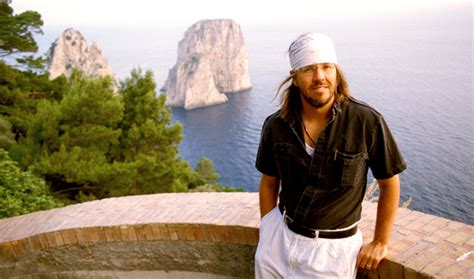
Consider the Lobster (Wallace). The author’s posthumous deification intrigued me. This writer penned a three-pound book and his fiction is very distinctive. Others have asserted that regarding his nonfiction pieces is a better place to start, given how much more accessible they are. There are ten essays in this collection, most of them published in various outlets. Wallace’s writing is such that I did not finish all of the essays. Why? He makes extensive use of footnotes, which disrupt the reading experience. He uses a pompous vocabulary, which I guess is the mark of MacArthur grantee. His sentences are practically paragraphs. Lastly, all the essays were penned about two decades ago, making them almost irrelevant.
The first story, Big Red Son, comprised the only long read that I crested. The article deals with Wallace’s coverage of the AVA. The next essay was on John Updike who, like Wallace, has since passed away. There was another piece on American English that was too dense for my liking. I did finish his musings on 9/11 in a small Midwest town. The writeup was titled, ‘The View from Mrs Thompson’s’. I then went through his review of Tracy Austin’s memoir. Given his tennis background, this was tolerable. I decided not to finish the next article, a lengthy, mind-numbing piece. I enjoyed the titular essay, wherein the author debates if lobsters feel pain. I admit though that the second half was getting too philosophical. The Dostoyevsky piece was the last one I crested. The long radio article in the end was not worthwhile and I gave up after fifteen pages.
Bloomington, Indiana
The author
Rockport
Rockport, Maine
In general, audiences have rated this well. As you can see, I found parts of the book unreadable. If this is the feel of Wallace’s nonfiction, then spare a thought for his fiction. Personally, I wouldn’t rate this as highly. To be honest, I was tossing between this item and Gorky Park by Martin Cruz Smith. The latter is the first in his Arkady Renko series. While perusing the Updike read, I admitted to picking the wrong book. However, credit must be given for his research and interview skills. He was able to pen at least two articles while not even being an insider. The collection was also of varied interest, so not everything was philosophical or grammatical. Altogether, I felt disappointed; this text is on par with the two Chatwin’s I reviewed earlier this year.